
A productive fruit tree depends on more than sunshine and water. Healthy roots, organic matter and an active soil community help support its growth.
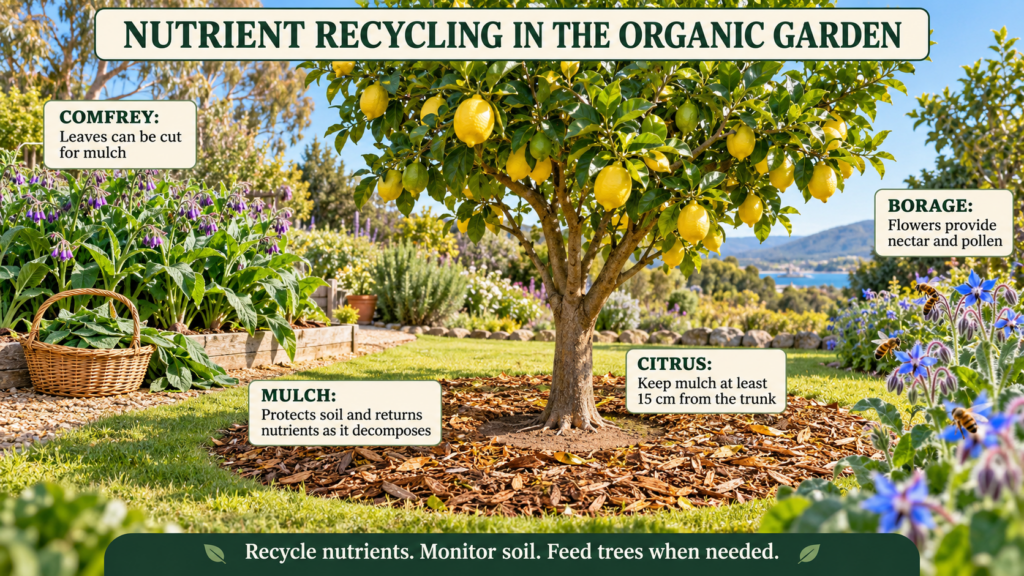
This image shows practical ways to care for a lemon tree: grow useful plants, recycle their leaves and protect the soil with mulch.
COMFREY: A SOURCE OF HOMEGROWN MULCH
Comfrey produces leafy growth that can be harvested and returned to the garden. Its foliage contains nutrients, including potassium. As cut leaves decompose, some of those nutrients become available for plants to use.
Grow comfrey in your own patch, then carry harvested leaves to the tree. This controls placement and reduces competition around young citrus. Comfrey is persistent and can regrow from root fragments, so choose its location carefully.
Cut established plants regularly, leaving enough growth for recovery. Mix the leaves with other suitable organic materials rather than expecting one plant to meet every nutritional need.
BORAGE: FLOWERS FOR BEES
Borage flowers offer nectar and pollen to visiting bees. Spent plants can be composted or used as surface mulch.
Borage can self-seed freely. Remove unwanted seedlings, or cut plants before seeds mature where spreading would be a problem. Give both the tree and its neighbours room to grow.
MULCH: KEEP THE SOIL COVERED
Organic mulch helps reduce evaporation, moderate soil temperature and suppress weeds. As it decomposes, it contributes organic matter and cycles nutrients back into the soil.
Use suitable materials such as leaves, composted garden residues and wood chips. Keep mulch at least 15 cm away from the citrus trunk, with the base exposed. Avoid piling mulch against bark.
PROTECT SHALLOW CITRUS ROOTS
Many citrus feeder roots occupy the upper soil, and roots can extend beyond the canopy. Avoid digging or cultivating underneath the tree.
Water the root zone according to rainfall, weather and soil moisture. Drainage matters: constantly wet soil can damage roots. Watch newly planted trees while their roots establish.
RECYCLING HAS LIMITS
Companion plants do not manufacture minerals. Their nutrient content depends on what they can absorb from the soil.
Comfrey can supply useful leafy material, but calling it a guaranteed deep-soil “mineral pump” goes beyond what its nutrient content alone demonstrates. Borage should be valued for its flowers and biomass without promising that it corrects mineral deficiencies.
Harvesting fruit removes nutrients from the garden. Compost, mulch and companion plants may help, but supplementary feeding can still be necessary. Use a soil test and local citrus advice to guide decisions.
Start small, observe the results and adjust. Watch leaf colour, growth, moisture and competition.
A resilient organic garden grows through steady care: protect roots, support useful flowers and return suitable organic material to the soil.