🌱 HOW TO MONITOR SOIL pH FOR A HEALTHIER ORGANIC GARDEN
Healthy soil is the foundation of every successful organic garden. But even soil rich in compost and nutrients can struggle to grow healthy plants if its pH is unsuitable. Understanding and monitoring soil pH helps gardeners improve nutrient availability, encourage beneficial soil organisms and grow stronger, more productive crops.
🌿 WHAT IS SOIL pH?
Soil pH measures how acidic or alkaline your soil is on a scale from 0 to 14. A pH of 7 is neutral, below 7 is acidic and above 7 is alkaline.
Most vegetables thrive in slightly acidic to neutral soil, generally between pH 6.0 and 7.0. However, different plants have different requirements.
Ideal soil pH for common crops
Approximate preferred ranges; requirements vary with soil and growing conditions.
| Blueberries |
4.5–5.5 |
| Potatoes |
5.0–6.0 |
| Strawberries |
5.5–6.5 |
| Tomatoes |
6.0–6.8 |
| Carrots |
6.0–7.0 |
| Beans |
6.0–7.0 |
| Brassicas |
6.5–7.5 |
🧪 HOW TO TEST YOUR SOIL
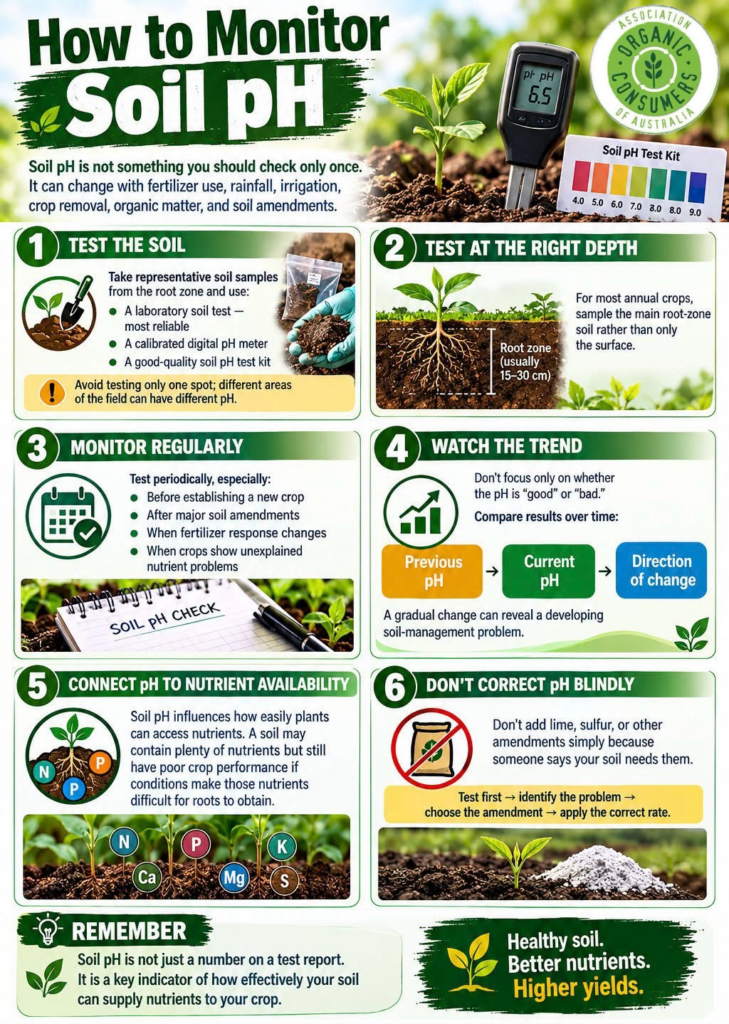
Testing is easier than you might think. Affordable soil pH kits are available from garden centres, while electronic meters can provide convenient readings if properly calibrated.
For more accurate results, send soil samples to an agricultural laboratory.
Take several small samples from different locations in each garden bed, generally from the top 10–15 cm. Mix them together in a clean container and follow your test kit’s instructions.
Test different growing areas separately, particularly vegetable beds, orchards and areas containing acid-loving plants.
📅 WHEN SHOULD YOU TEST?
Test your soil before establishing a new garden and approximately once a year thereafter.
Retest several months after
applying lime or other pH amendments, allowing time for changes to occur.
Keeping a simple record of your results helps identify long-term trends and prevents unnecessary treatments.
🌱 CORRECTING SOIL pH ORGANICALLY
If your soil is too acidic, agricultural lime can gradually raise its pH. Dolomite lime also supplies magnesium but should only be used when additional magnesium is needed.
If your soil is too alkaline, elemental sulfur can gradually lower pH through microbial activity. Its effectiveness depends on soil temperature, moisture and composition.
Mature compost improves soil structure, moisture retention and biological activity, but it cannot reliably correct significant pH problems.
Avoid adding wood ash indiscriminately because it can rapidly increase alkalinity.
Always use soil test results to determine appropriate amendment rates.
🪱 WHY pH MATTERS
Soil pH influences the availability of essential nutrients including nitrogen, phosphorus, potassium, iron and manganese.
Extremely acidic or alkaline conditions can restrict nutrient uptake even when those nutrients are present.
Soil pH also affects earthworms, beneficial microorganisms and the biological processes responsible for breaking down organic matter.
However, pH is only one measure of soil health. Organic matter, drainage, soil structure, microbial diversity and nutrient balance are equally important.
💚 GROW BETTER BY UNDERSTANDING YOUR SOIL
The goal of organic gardening isn’t to force every garden bed to the same pH. It’s to create suitable conditions for the plants you’re growing.
Test regularly, make gradual adjustments and avoid adding amendments without understanding what your soil actually needs.
Healthy soil produces healthy plants. Understanding your soil’s pH is one of the simplest ways to make your organic garden more productive, resilient and sustainable.