Parsley (Petroselinum crispum) is more than a garnish. This productive, leafy herb adds fresh flavour to meals and grows well in garden beds or containers.
Choose the right spot
Parsley grows in full sun to part shade. In warm gardens, morning sun and afternoon shade can help in hot weather. Choose fertile, moisture-retentive but well-drained soil. Before planting, mix in mature compost. Mulch with straw or leaf litter to keep the soil from drying out, and water consistently—especially while seeds are germinating and during hot spells.
Sow patiently
Parsley is easiest to grow from seed, but germination can be slow and uneven. Sow in place or in small pots, taking care not to disturb roots when transplanting. Sow about 3 mm deep, water gently, and keep the seed bed evenly moist. Germination commonly takes around two to three weeks, so mark the row and don’t give up too early.
When seedlings are established, thin or space them about 30 cm apart. A 20–30 cm pot suits one or two plants; ensure it drains well. Flat-leaf parsley has a strong flavour and may cope better in wet weather; curly parsley is also useful in cooking and makes an attractive edging plant.
Care and harvest
Feed lightly with compost or organic liquid feed. Avoid letting plants dry out, which can stress them and encourage early flowering. Check for chewing insects, hand-pick pests and remove damaged leaves. Allow airflow and water the soil, not the foliage.
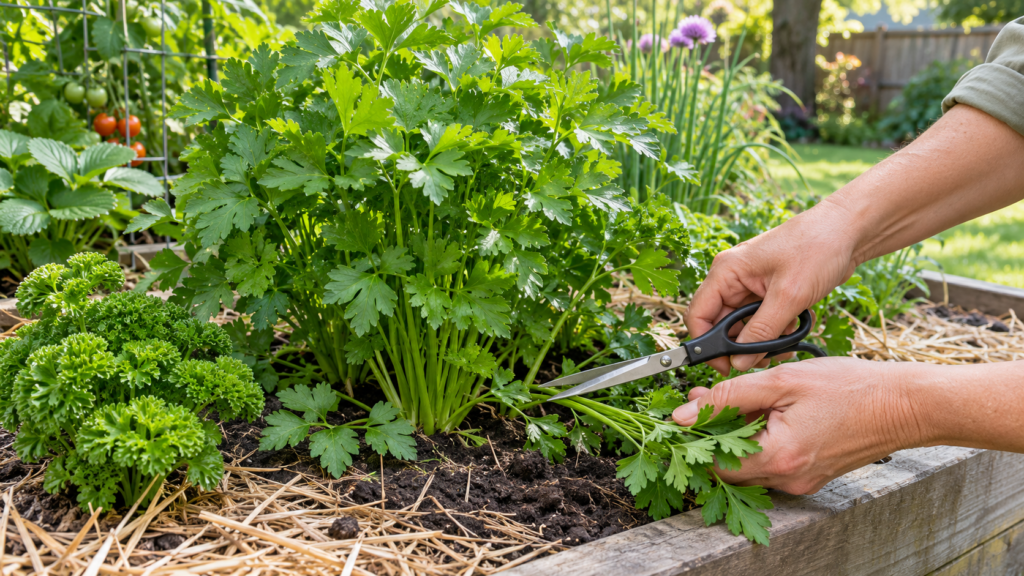
Harvest by cutting the outer stems close to the base, leaving the central new growth to keep producing. Pick as needed and sow a follow-up crop for continuity. Parsley is usually grown as a biennial, but many gardeners treat it as an annual: in its second year it flowers and sets seed, and the leaves can become tougher or more bitter. Remove flower stalks to extend the leafy harvest, or let a few set seed if you want to save seed and welcome self-sown plants.
Why grow it?
Fresh parsley gives soups, salads, sauces, eggs, vegetables and grain dishes a bright, savoury lift. It can be chopped into pesto, mixed through tabbouleh or frozen in small portions for later. The leaves contain vitamin K and vitamin C, alongside other nutrients; even small handfuls can add flavour and colour to meals.
Growing parsley organically gives you a steady supply, reduces waste from shop-bought bunches and makes a small garden more productive.
Start with a row or a pot, keep the seed bed moist, and be patient. Parsley takes time to sprout, then rewards you with fresh leaves for months.
Sources: ABC Gardening Australia, “Parsley”; ABC Gardening Australia magazine, “Parsley”; University of Illinois Extension, “Parsley.”