
Avoid plastic contamination in your Garden
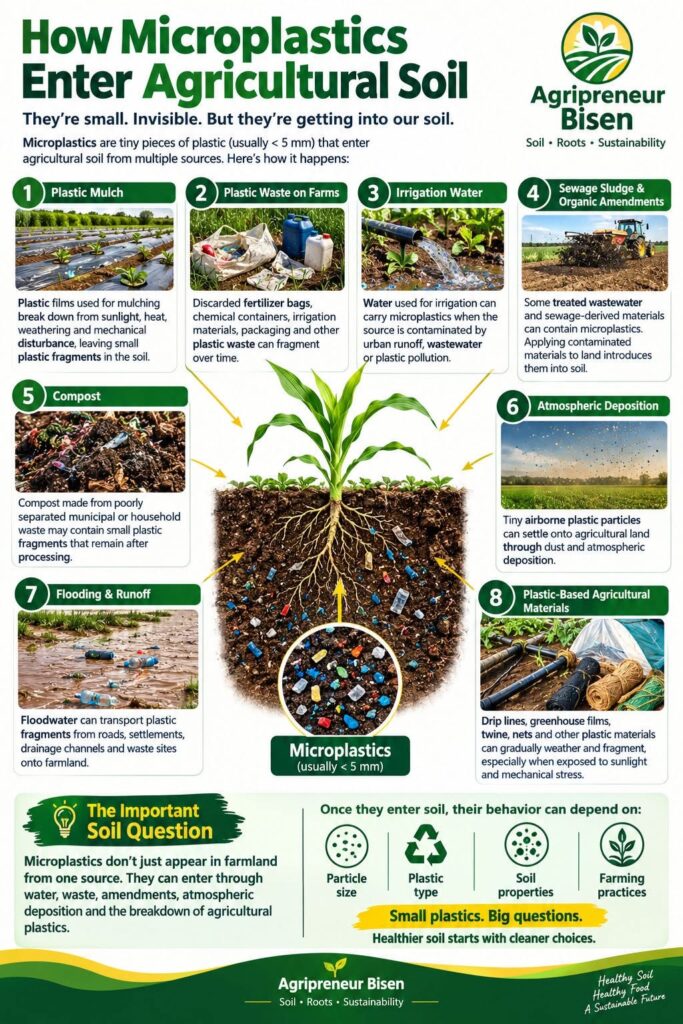
1️⃣ Plastic Mulch
Plastic films used for mulching can gradually break down from sunlight, heat, weathering, and mechanical disturbance, leaving small plastic fragments in the soil.
2️⃣ Plastic Waste on Farms
Discarded fertilizer bags, chemical containers, irrigation materials, packaging and other plastic waste can fragment over time.
3️⃣ Irrigation Water
Water used for irrigation can carry microplastics when the water source is contaminated by urban runoff, wastewater or plastic pollution.
4️⃣ Sewage Sludge & Organic Amendments
Some treated wastewater and sewage-derived materials can contain microplastics. Applying contaminated materials to agricultural land can introduce them into soil.
5️⃣ Compost
Compost made from poorly separated municipal or household waste may contain small plastic fragments that remain after processing.
6️⃣ Atmospheric Deposition
Tiny airborne plastic particles can settle onto agricultural land through dust and atmospheric deposition. Pretty hard to deal with but be aware of your neighbours activities and intervene if necessary.
7️⃣ Flooding & Runoff
Floodwater can transport plastic fragments from roads, settlements, drainage channels and waste sites onto farmland.
8️⃣ Plastic-Based Agricultural Materials
Drip lines, greenhouse films, twine, nets and other plastic materials can gradually weather and fragment, especially when exposed to sunlight and mechanical stress.
🌍 The Important Soil Question
Microplastics don’t just appear in farmland from one source.
They can enter through water, waste, amendments, atmospheric deposition and the breakdown of agricultural plastics.
And once they enter soil, their behavior can depend on particle size, plastic type, soil properties and farming practices.