🌱 Asparagus is one of the best long-term investments in an organic garden. A well-established bed can produce delicious spears for 15–20 years or longer.
🌱 CHOOSE THE RIGHT POSITION
Asparagus prefers full sun and deep, fertile, well-drained soil. Choose a permanent bed where its tall summer foliage won’t shade smaller vegetables.
Aim for a soil pH around 6.5–7.5. Remove perennial weeds and enrich the bed with mature compost before planting.
🌿 CROWNS OR SEEDS?
You can grow asparagus from seed, but planting healthy one-year-old crowns gives you a head start.
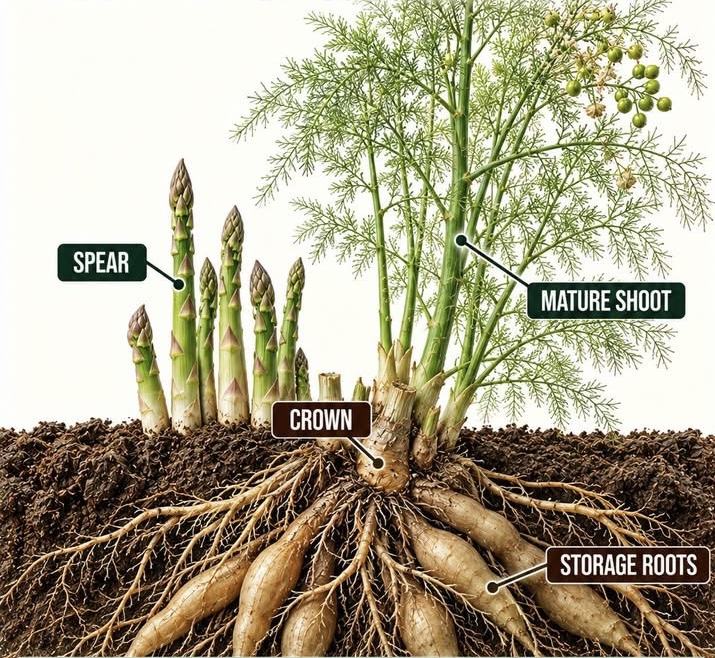
Plant crowns in trenches about 15–20 cm deep, spreading the roots over a small mound of soil. Space plants roughly 30–45 cm apart. Gradually fill the trench as shoots grow.
💧 WATER & MULCH
Keep young plants consistently moist while roots establish, without waterlogging them. Apply organic mulch to conserve moisture, suppress weeds and feed soil organisms as it decomposes.
Established plants still benefit from watering during prolonged dry periods.
🌱 FEED THE SOIL
Top-dress with mature compost during dormancy or after harvesting. Use organic fertiliser if needed, but avoid excessive nitrogen.
⏳ PATIENCE PAYS
The biggest mistake is harvesting too much too soon. Young plants need their spears to develop into fern-like foliage. This stores energy in the crown for future crops.
Harvest lightly while plants establish. A substantial harvest usually begins around the third year. Cut or snap spears when they are about 15–20 cm tall and the tips are still tight.
After several weeks of harvesting, stop picking and allow the remaining shoots to become ferns. Leave healthy foliage until it naturally yellows, then cut it back.
💚 WHY EAT ASPARAGUS?
Asparagus is low in kilojoules and provides fibre, folate, vitamin K and vitamin C, and beneficial plant compounds.
Folate is important for normal cell division. Vitamin K contributes to normal blood clotting and bone health, while fibre supports digestive health and the gut microbiome.
🌍 WHY GROW ORGANICALLY?
A permanent asparagus bed encourages long-term soil building. Compost and mulch add organic matter, protect soil and support beneficial organisms while reducing reliance on synthetic fertilisers and pesticides.
Homegrown asparagus can travel from garden to plate within minutes, reducing packaging, transport and storage.
It takes patience to establish, but few vegetables reward the gardener for so long. Plant an asparagus bed today and you could still be harvesting from it decades from now.
🌱 CHOOSE THE RIGHT POSITION
Asparagus prefers full sun and deep, fertile, well-drained soil. Choose a permanent bed where its tall summer foliage won’t shade smaller vegetables.
Aim for a soil pH around 6.5–7.5. Remove perennial weeds and enrich the bed with mature compost before planting.
🌿 CROWNS OR SEEDS?
You can grow asparagus from seed, but planting healthy one-year-old crowns gives you a head start.
Plant crowns in trenches about 15–20 cm deep, spreading the roots over a small mound of soil. Space plants roughly 30–45 cm apart. Gradually fill the trench as shoots grow.
💧 WATER & MULCH
Keep young plants consistently moist while roots establish, without waterlogging them. Apply organic mulch to conserve moisture, suppress weeds and feed soil organisms as it decomposes.
Established plants still benefit from watering during prolonged dry periods.
🌱 FEED THE SOIL
Top-dress with mature compost during dormancy or after harvesting. Use organic fertiliser if needed, but avoid excessive nitrogen.
⏳ PATIENCE PAYS
The biggest mistake is harvesting too much too soon. Young plants need their spears to develop into fern-like foliage. This stores energy in the crown for future crops.
Harvest lightly while plants establish. A substantial harvest usually begins around the third year. Cut or snap spears when they are about 15–20 cm tall and the tips are still tight.
After several weeks of harvesting, stop picking and allow the remaining shoots to become ferns. Leave healthy foliage until it naturally yellows, then cut it back.
💚 WHY EAT ASPARAGUS?
Asparagus is low in kilojoules and provides fibre, folate, vitamin K and vitamin C, and beneficial plant compounds.
Folate is important for normal cell division. Vitamin K contributes to normal blood clotting and bone health, while fibre supports digestive health and the gut microbiome.
🌍 WHY GROW ORGANICALLY?
A permanent asparagus bed encourages long-term soil building. Compost and mulch add organic matter, protect soil and support beneficial organisms while reducing reliance on synthetic fertilisers and pesticides.
Homegrown asparagus can travel from garden to plate within minutes, reducing packaging, transport and storage.
It takes patience to establish, but few vegetables reward the gardener for so long. Plant an asparagus bed today and you could still be harvesting from it decades from now.
🌱 Plant once. Feed the soil. Harvest for years.