
🥒 Few vegetables capture the freshness of summer like a crisp cucumber picked straight from the garden. Cucumbers are fast-growing, highly productive and ideal for garden beds, raised beds or large containers. Give them warmth, fertile living soil, water and something to climb, and they can produce an impressive harvest.
🌱 CHOOSING & PLANTING
Cucumbers love warm weather and shouldn’t be planted outdoors until frost danger has passed and the soil has warmed.
Choose from slicing cucumbers for salads, smaller pickling varieties, or long types such as Lebanese and continental cucumbers. Select varieties suited to your climate and growing space.
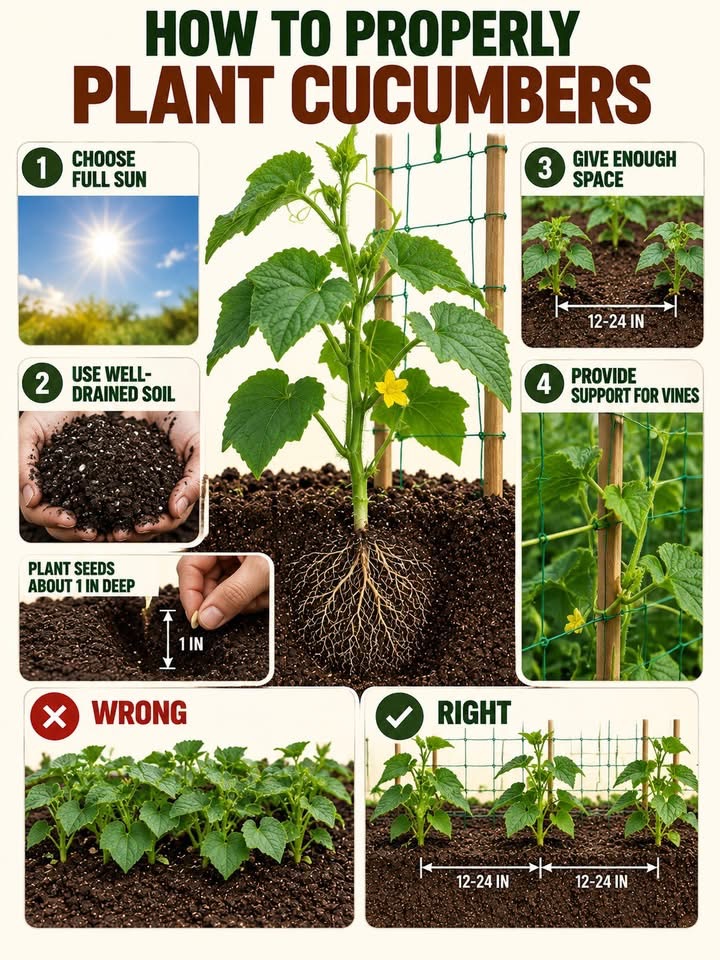
Plant in full sun in fertile, well-drained soil enriched with mature compost and well-rotted manure. Sow seeds about 2 cm deep or transplant seedlings carefully because cucumbers dislike root disturbance.
🌿 GROW VERTICALLY
Cucumbers naturally produce climbing vines. Growing them up a trellis saves space, improves airflow, keeps fruit away from damp soil and makes harvesting easier.
In smaller gardens, vertical growing can turn a surprisingly small area into a productive cucumber patch.
💧 WATERING & FEEDING
Consistent moisture is essential. Cucumbers contain around 95% water, and irregular watering can stress plants and reduce fruit quality.
Water deeply at soil level rather than frequently wetting the foliage. Apply organic mulch to conserve moisture, moderate soil temperature and suppress weeds.
Feed throughout active growth with compost, worm castings or an appropriate organic fertiliser. Once flowering begins, avoid excessive nitrogen, which can encourage masses of leaves at the expense of fruit.
🐝 FLOWERS & POLLINATION
Many traditional cucumbers produce separate male and female flowers. Bees and other insects transfer pollen between them, so encourage pollinators by growing flowering herbs and flowers nearby.
Some modern varieties can develop fruit without pollination, so check the characteristics of the variety you’re growing.
🐞 ORGANIC PEST MANAGEMENT
Watch for aphids, cucumber beetles, mites, whiteflies and fungal diseases such as powdery mildew. Encourage beneficial insects, rotate crops, provide good airflow and remove badly diseased leaves.
Healthy soil and regular observation are often more effective than waiting until pests become severe.
🥒 HARVEST REGULARLY
Pick cucumbers while young, firm and crisp, before they become oversized and seedy. Frequent harvesting encourages the plant to continue producing.
Use scissors or secateurs rather than pulling fruit from delicate vines.
💚 BENEFITS OF CUCUMBERS
Cucumbers are naturally low in calories and their high water content contributes to dietary fluid intake. They provide vitamin K and small amounts of vitamin C, potassium and other nutrients. Eating the skin adds fibre, so there’s no need to peel organically grown cucumbers if the skin is tender—just wash them first.
Enjoy cucumbers fresh in salads, sandwiches and chilled soups, ferment them into pickles or combine them with yoghurt, herbs and lemon.
From one tiny seed can come metres of vine and dozens of crisp fruits. Build healthy soil, welcome the pollinators, water consistently and let your organic garden do the rest. 🥒🌱