🌳 HOW TO GROW A THRIVING ORGANIC FOOD FOREST
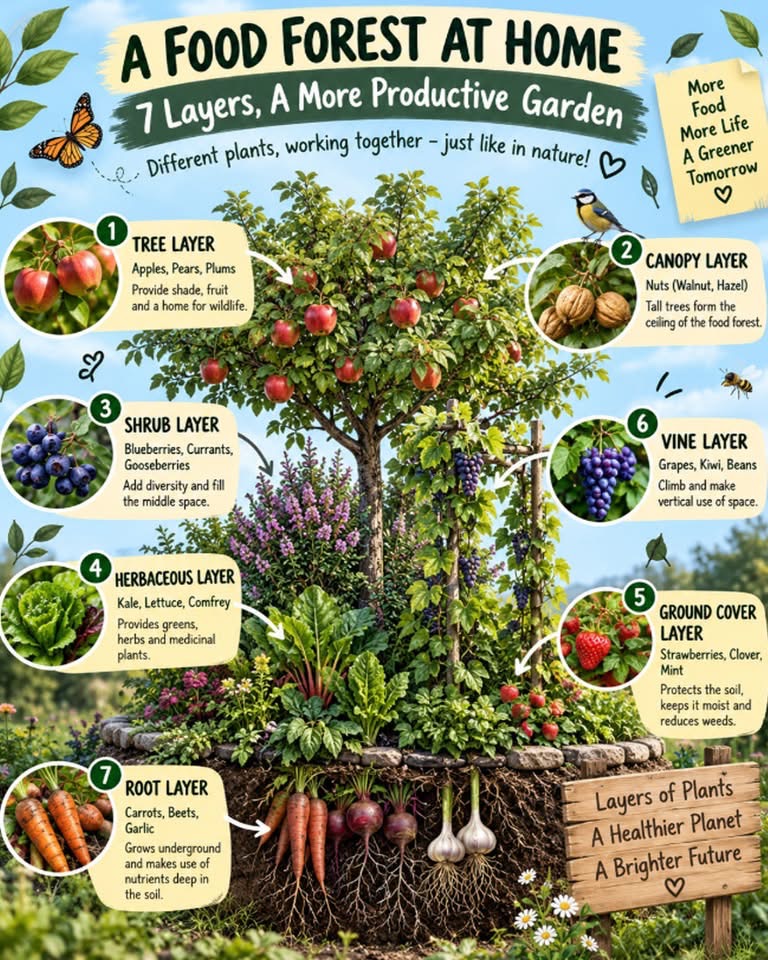
A food forest takes its inspiration from natural woodland. Instead of planting one crop in rows, we grow trees, shrubs, vines, herbs, groundcovers and root crops together in layers. The result can be a productive ecosystem providing food while supporting soil life, pollinators and wildlife.
🌱 START WITH THE SITE
Observe before planting. Where does the sun fall? Where does water collect? Which areas are exposed to wind? Improve poor soil with compost, mulch and organic matter.
Choose plants adapted to your climate, rainfall and space. A food forest should suit its location, not be copied blindly from a diagram.
🌳 BUILD IN LAYERS
Use large fruit or nut trees for the upper layer and smaller fruit trees below. Add productive shrubs, perennial vegetables, herbs, flowers and groundcovers. Root crops occupy the soil layer, while vines use vertical space on trees or supports.
Not every garden needs every layer. Diversity is the goal, not overcrowding. Consider each plant’s mature size and maintain enough sunlight and airflow for good crops.
🐝 ENCOURAGE BIODIVERSITY
Grow flowers that provide nectar and pollen through the seasons. They support bees and other pollinators and attract predatory insects that help control pests. Native plants also provide wildlife habitat.
🌿 FEED THE SOIL
Healthy soil is the engine of an organic food forest. Protect it with living groundcovers or organic mulch. Compost garden waste, return fallen leaves where practical and minimise unnecessary digging.
Use compost, worm castings and well-rotted manure to recycle nutrients. 💧 MANAGE WATER WISELY
Capture rainfall where appropriate and let it soak into the soil. Mulch reduces evaporation, while soil rich in organic matter generally holds moisture better. 🍎 KEEP IT PRODUCTIVE
A food forest isn’t a garden you plant and forget. Prune for light and airflow, control aggressive plants, replenish mulch, monitor pests and diseases and harvest regularly. Replace plants that continually struggle with species better suited to your conditions.
💚 WHY GROW A FOOD FOREST?
A well-designed organic food forest can produce fruit, nuts, vegetables, herbs and roots from the same area while protecting soil and creating habitat. Perennial plants reduce repeated cultivation, while fallen organic material helps cycle nutrients.
Food forests can reduce reliance on synthetic fertilisers and pesticides by building fertility and ecological resilience into the garden.
Most importantly, they change how we think about growing food. Instead of treating a garden as a factory requiring constant inputs, we can design it as a living community.
Build the soil, increase diversity, choose the right plants and work with nature. Over time, your garden can become both a thriving ecosystem and a productive pantry. 🌱🌳